
Places · Street note
Home battery installation in Liverpool
Updated
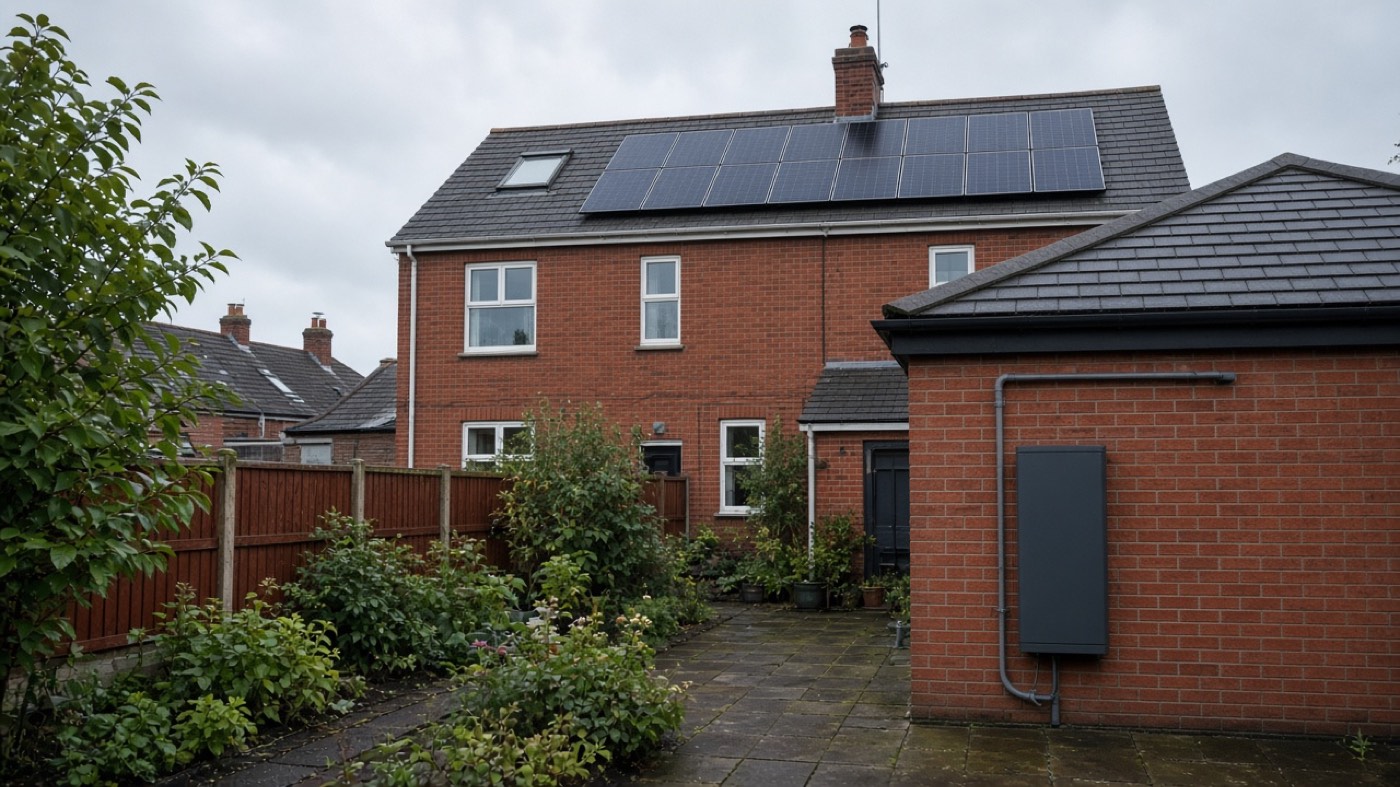
Liverpool terraces, Victorian bays and suburban semis sit alongside waterfront apartments. Salt air is a background issue for external metalwork, and many terraces have no garage.
The houses, not the postcode average
Rear roofs on terraces can work well if they are not overshadowed by a two-storey outrigger. Waterfront flats often have no private roof.
SP Energy Networks covers Merseyside, which is a different DNO from Manchester next door. Do not start a G99 form with the wrong network.
Narrow terraced streets and on-street parking should be mentioned in the survey notes.
What gets fitted here
House installs with a short run to a rear yard or garage are the volume job. Apartment installs need a demise check first.
Merseyside cloud cover keeps winter self-generation modest. Overnight charging is the reliable December strategy.
SP Energy Networks, yield and a 4 kWp example
A 4 kWp array at 910 kWh per installed kilowatt is about 3,640 kWh a year before shade. That is the local ceiling on solar charging, not a promise the battery will cycle fully in January.
In Liverpool, on SP Energy Networks, 5 kW sits above the 3.68 kW G98 line, so this wants a G99 application before anyone energises it. Export can still be capped. Agree that before the inverter is ordered. The figure uses 8 kWh and 4 kWp, which is enough to tell two quotes apart if they assumed something else.
Take an 8 kWh pack, cycled about 300 times, at 90% round trip. Charge at 9.0p, and value what comes back at 28.4p. Export given up is priced at 8.0p. About 1371 kWh a year of the charge is treated as spare solar from 4 kWp that might otherwise have been exported. Delivered energy is about 2160 kWh. After charging cost and lost export, the figure saves about £433 a year. Set that against £6,385 fitted, which is a September 2026 illustration at the temporary 0% residential rate, not a quote. That is a simple payback of about 14.7 years on these assumptions. Nudge the night rate up by 4p and see if you still like it.
What I would not sign in Liverpool
Where the job is a qualifying install in a home, the 0% rate runs to 31 March 2027 and is due to become 5% after that. This figure prices the work at £6,385 on that basis. It does not apply to a shop, and it does not apply to a battery you buy and fit yourself.
I would not pay the bulk of £6,385 before the DNO route for a 5 kW inverter is known.
Merseyside is SP Energy Networks. A Manchester form will not do.
Common questions
Is the price on this page a quote?
No. £6,385 is a September 2026 illustration for a 8 kWh example at the temporary 0% residential rate. Your survey replaces it.
Will it stay on in a power cut?
Only if a gateway or essential-load board was designed and paid for. A standard grid-tied battery turns off with the grid. On this 8 kWh example the inverter is 5 kW, and backup is still a separate line.
What paperwork should I keep?
Keep the MCS certificate where the job is certified, the electrical certificate, the DNO record, the schematic, the warranty registration and a photo of the schedule. For an illustrated £6,385 job, that folder is part of what you bought.
What if the cheap rate is not 7p?
Then the figure changes. This page used 9.0p as a charge rate and 28.4p as the rate avoided. A smaller gap means a worse payback. Read the live tariff.
Sources
Want a price for your house?
The figures above are a rough guide. An installer still needs to see your fuse board, where the battery will go, and whether you want power during a blackout.