

Quick answer
Anker SOLIX sells two fixed home batteries in the UK: the X1, a slim modular hybrid system built from 5 kWh battery modules and a 3.68 kW to 6 kW single-phase power module, and the newer XE, an all-in-one hybrid with a 7 kWh battery and a 5 kW inverter. Both are IP66 rated, carry a 10 year warranty on Anker's UK pages, and are sold through installers on Anker's UK certified installer list, which named 33 firms on 28 November 2026. The Solarbank 4 E5000 Pro is a separate product that Anker markets as plug-and-play, but its UK page says it must be hardwired on a dedicated circuit by a Part P registered electrician, and Anker's portable power stations are not installed batteries at all.
- Fixed Anker home batteries in the UK: the X1 (modular, 5 kWh per battery module) and the XE (7 kWh, all-in-one)
- Both are hybrid systems with solar inputs, IP66 rated, with a 10 year warranty on Anker's UK pages
- The Solarbank 4 E5000 Pro must be hardwired by a Part P electrician in the UK, despite its plug-in design
- G98 or G99 depends on the inverter: a 3.68 kW X1 can fit under G98, the 5 kW XE needs G99
- Anker's EU warranty policy excludes installs not done by a certified installer; the UK version was not online when we checked
- Anker's UK list had 33 certified installers on 28 November 2026, four of them under South West
The Anker SOLIX models on this page
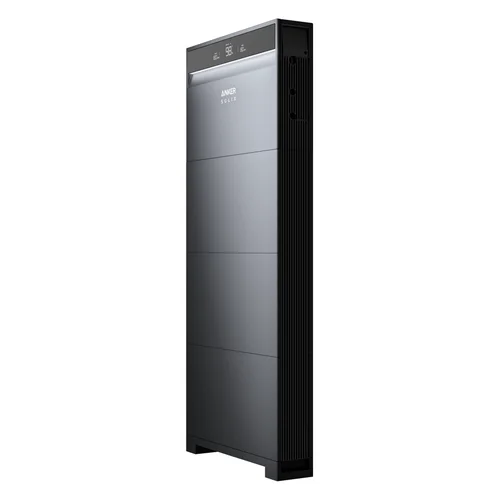
Anker SOLIX X1Image: Anker SOLIX UK 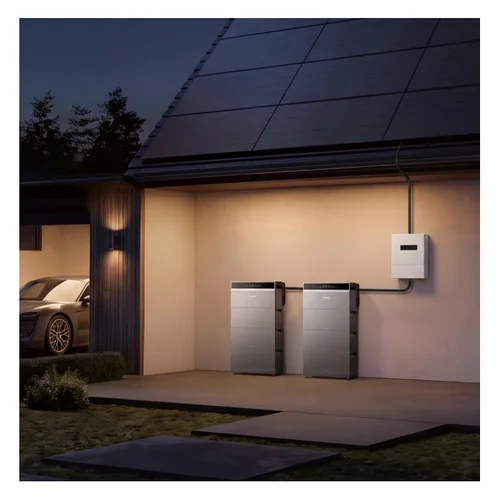
Anker SOLIX XEImage: Anker SOLIX UK 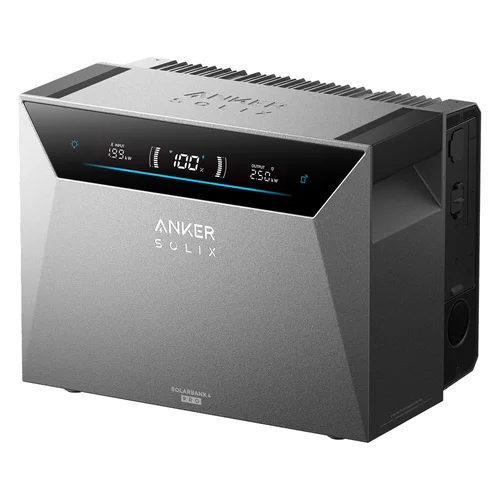
Anker SOLIX Solarbank 4 E5000 ProImage: Anker SOLIX UK
What Anker SOLIX sells for UK homes
Anker is best known for chargers and portable power stations, and its SOLIX brand now covers three quite different kinds of storage in the UK. Only some of them need an installer, so it helps to know which one you are looking at before you ask for quotes.
The X1 and the XE are fixed home batteries. Each has its own inverter, is wired into the consumer unit, connects to solar panels and is sold through installers rather than in a shopping basket. The XE page carries a Find an Installer button, and Anker's UK installer pages are built around the X1. UK distributor Segen featured the X1 in February 2026, which makes it a UK distribution route for installers.
The Solarbank 4 E5000 Pro sits in between. Anker sells it online and calls it a balcony and plug-and-play system, but its UK product page says that in the UK it must be fitted by a Part P registered electrician on a dedicated hardwired circuit, using the terminals supplied. Anker's portable power stations, such as the S2000 on its UK site, plug into a socket and are not installed batteries.
We have not tested any Anker product. Everything here comes from Anker's UK product pages, its installer list and its published warranty policy, read on 28 November 2026. We do not list shop prices.
| Product | Type | Battery | Who fits it |
|---|---|---|---|
| X1 | Modular hybrid, fixed | 5 kWh modules, up to 6 per system | Anker certified installer |
| XE | All-in-one hybrid, fixed | 7 kWh | Anker certified installer |
| Solarbank 4 E5000 Pro | Plug-in design, hardwired in the UK | 5 kWh, expandable to 30 kWh | Part P registered electrician |
| Portable power stations | Plug into a socket | Varies | Nobody: not an installed battery |
Anker SOLIX X1: modules, power and backup
The X1 is built from two kinds of box that stack on the wall or floor: a power module, which is the hybrid inverter with two solar inputs (MPPTs), and battery modules. Anker lists each battery module at 5 kWh of lithium iron phosphate (LFP), with 3 kW maximum charge or discharge, a 350 V to 550 V DC battery range, a weight of 51 kg and an IP66 rating. The UK page does not say how much of the 5 kWh is usable, so ask the installer for the usable figure in writing.
The single-phase power module comes in 3.68 kW, 4.6 kW, 5 kW and 6 kW versions, weighs 19 kg and takes up to 7.36 kW to 12 kW of solar depending on the version. Each battery module is rated at 3 kW, and Anker's example builds pair one module with 3 kW of output, so a 6 kW power module needs at least two. A single system takes up to six battery modules, so the largest single-phase system on one power module is 6 kW and 30 kWh.
Backup is built in: Anker describes 0 ms load-side switching and an off-grid mode, and says its Power Dock Pro lets solar from another brand keep charging the battery in a power cut. The whole assembly is 15 cm deep, and Anker rates it for minus 20 to 55 degrees and for wall or ground mounting.
Two things on the UK page need checking with the installer. Anker's three-phase power module, 5 kW to 12 kW, still carries footnotes describing it as planned, and the page gives different limits for how many single-phase systems can run in parallel (two in the single-phase spec table, more in footnotes marked as planned, and six in the overview). Ask which power modules the installer can supply now and how far your system can grow.
| Part | Rating | Size (W x H x D) | Weight |
|---|---|---|---|
| Battery module | 5 kWh LFP, 3 kW | 670 x 360 x 150 mm | 51 kg |
| Single-phase power module | 3.68, 4.6, 5 or 6 kW | 670 x 335 x 150 mm | 19 kg |
| Three-phase power module | 5, 8, 10 or 12 kW | 670 x 450 x 150 mm | 30 kg |
Anker SOLIX XE: the all-in-one model
The XE puts the inverter and battery in one stack. Anker's UK spec table lists a 7 kWh LFP battery rated for 10,000 cycles, a 5 kW single-phase inverter (21.7 A rated output current), three MPPTs taking up to 15 kW of solar, backup output of 5 kW continuous with 7.5 kW for 10 seconds, IP66 and C5-M corrosion ratings, a net weight of 76.5 kg and a 10 year warranty.
Backup runs through a separate Backup Auto-Switch, which Anker rates at 63 A or 100 A with up to 16 kW of backup power and a 0 ms switchover. Anker also says the XE works with an existing solar system without rewiring the panels, which matters if you already have a working solar inverter and only want to add storage.
Anker's launch article, published as sponsored content in pv magazine on 14 September 2026, says the XE stacks to 42 kWh (six modules) in one string and up to three units in parallel, with 5, 6 and 8 kW inverter options. The UK spec table we read showed only the 5 kW figure, so confirm the inverter size and maximum stack on the quote.
Why the Solarbank 4 E5000 Pro still needs an electrician
Anker's UK page answers this directly. The Solarbank 4 E5000 Pro ships with a plug-in AC cable because it is built for markets that allow plug-in batteries, but in the UK Anker says installation must be done by an electrician registered under a Part P scheme such as NICEIC or NAPIT, on a dedicated hardwired circuit to the distribution board, paired with the Anker SOLIX Smart Meter Gen 2. Anker says it will review plug-in use if UK regulations and BSI product standards change.
On paper it is a 5 kWh battery with 5,000 W of solar input and 2,500 W of AC output, expandable with up to five extra batteries to 30 kWh, IP66 rated, with a 10 year warranty. Anker's FAQ says it has completed G98 certification and is listed. In a power cut it switches to off-grid mode within 10 ms, but only for loads plugged into its own 2,500 W off-grid port, not the whole house. That is the main practical difference from the X1 and XE.
G98 or G99: the answer changes by model
The network operator looks at inverter output, not battery size. Under G98, a home can connect up to 16 A per phase of type-tested generation, about 3.68 kW on a single-phase supply, and the installer notifies the operator after commissioning. Anything above that is a G99 application, made and approved before connection. Existing solar inverters count towards the same 16 A.
That puts the three Anker products in different places. A 3.68 kW X1 power module on a house with no other solar is at the G98 limit. The 4.6, 5 and 6 kW X1 modules, and the XE at 21.7 A, are above it and need G99. The Solarbank's 2,500 W output is under 16 A on its own, but added to an existing solar inverter the total may not be. Ask the installer to check the exact model on the ENA Type Test Register and to state the route on the quote. Our G98 or G99 route finder and G98 and G99 for home batteries go through the sums.
| Model | Inverter output | Approx. amps | Likely route |
|---|---|---|---|
| X1, 3.68 kW module | 3.68 kW | 16 A | G98 |
| X1, 4.6 to 6 kW module | 4.6 to 6 kW | 20 to 26 A | G99 |
| XE | 5 kW | 21.7 A (Anker) | G99 |
| Solarbank 4 E5000 Pro | 2.5 kW | about 11 A | G98 (Anker says listed) |
Part P, MCS and VAT
Every one of these needs a new circuit, and the Planning Portal lists a complete new circuit and a new consumer unit as notifiable work in England and Wales. A registered competent person self-certifies it, or building control is told before work starts. Scotland runs a separate building standards system. See Part P and home batteries.
MCS certifies installers, not batteries: ESS News reported in October 2026 that MCS is still consulting on a battery product standard. So an X1 or XE can go on an MCS certificate if the installer is MCS certified for battery storage and registers the job. MCS says certificates arrive within 10 working days and are needed for some grants and incentives. Check the firm on the MCS search. More in MCS and home batteries.
On VAT, HMRC's Notice 708/6 zero-rates the installation of batteries in homes until 31 March 2027, and the relief also covers fitting materials the customer bought from a retailer. The X1 and XE are normally supplied and fitted by the installer, so the whole job is zero-rated. Anker's UK shop lists the Solarbank including 20% VAT, which is the standard rate HMRC applies to a retail sale without fitting; the electrician's fitting charge can still be zero-rated. See VAT on supply-only and fitted batteries.
Warranty: what to get in writing
Anker's UK pages give 10 years on the X1, XE and Solarbank but do not link to UK warranty terms; the UK warranty address we tried returned a page not found on 28 November 2026. Anker's EU policy for the X1 is the closest published version, and its terms are worth knowing before you choose an installer.
That policy covers the X1 power modules for 10 years and the X1-B5-H battery module for 10 years or 13.17 MWh of throughput, whichever comes first, with at least 80% capacity at end of life. Cover starts at installation or 180 days after delivery, whichever is sooner, and batteries must be installed within 30 days of receipt. It excludes installation not carried out by a certified installer, damage from third-party components not supplied by Anker, and use outside the documented temperature limits. It is also limited to the country of purchase.
In practice that points to one buying rule: use an installer on Anker's certified list, buy the kit through them, and ask for the UK warranty document and the usable capacity of each module before you sign.
Finding an Anker SOLIX installer, including around Swindon
Anker's UK certified installer page listed 33 firms for home storage on 28 November 2026, grouped by region. South East had the most with eight, Scotland five, and the South West four. The list gives regions and contact details, not coverage areas, and none of the entries named Swindon.
For a Swindon home, ask for quotes here and say you want an Anker SOLIX X1 or XE: the installer who replies should confirm they are on Anker's UK certified list before quoting, because Anker's warranty depends on it. Swindon is on the SSEN network, so the installer will be dealing with SSEN for the G98 or G99 step. We have not checked any listed firm's registrations. Our Swindon page covers local battery installers more widely, and the battery size calculator helps you decide between 5 kWh steps on an X1 and the 7 kWh XE before you ask for quotes.
- Are you on Anker's UK certified installer list, and will you supply the kit?
- Which power module or XE inverter size, and is it G98 or G99 at my address?
- What is the usable kWh, not just the nameplate figure?
- Will backup cover the whole house or selected circuits, and where does the switch go?
- Will the job be MCS registered and notified under Part P?
- Can I see Anker's UK warranty terms before I sign?
Frequently asked questions
Does Anker sell a home battery in the UK?
Yes. Anker's UK site lists the Anker SOLIX X1, a modular hybrid system with 5 kWh battery modules, and the Anker SOLIX XE, an all-in-one hybrid with a 7 kWh battery. Both are sold and fitted through installers. The Solarbank 4 E5000 Pro is also sold in the UK but must be hardwired by a Part P registered electrician.
How much storage does the Anker SOLIX X1 have?
Anker lists 5 kWh per battery module and up to six modules on one power module, so 5 kWh to 30 kWh per system. Anker's pages quote larger totals for several systems in parallel, but give conflicting parallel limits for the single-phase model, so confirm the maximum with the installer.
Is the Anker SOLIX X1 a hybrid or AC-coupled battery?
The X1 power module is a hybrid inverter with two solar inputs, so new panels can connect to it directly. Anker also says its Power Dock Pro lets solar from another brand keep charging the X1 in a power cut. Read what a hybrid inverter does for the difference.
Can I plug the Anker Solarbank 4 into a socket in the UK?
No. Anker's UK page says the Solarbank 4 E5000 Pro must be installed by a Part P registered electrician on a dedicated hardwired circuit, with hardwiring terminals supplied as standard. Anker says it will review plug-in use if UK rules and BSI standards change.
Does an Anker SOLIX XE need G99?
On Anker's UK figures the XE inverter is 5 kW with a 21.7 A rated output current, above the 16 A per phase G98 limit, so the installer should expect a G99 application. Confirm against the exact model on the quote.
Is there an Anker SOLIX installer in Swindon?
Anker's UK certified installer list, checked on 28 November 2026, had no entry naming Swindon. It listed four firms under South West and others in neighbouring regions, without coverage areas, so ask each one whether it covers your postcode. We have not vetted any of them.
What warranty does Anker give on the X1?
Anker's UK page says 10 years. Anker's EU policy sets the battery module at 10 years or 13.17 MWh of throughput, with 80% capacity at end of life, and excludes installs not done by a certified installer. Ask the installer for the UK version of the terms.
Want a real price for your home?
Figures here are a guide. An installer still needs to see your fuse board, where the battery will go and whether you want backup. Tell us your postcode and local installers will quote.
Related guides


Sources
- Anker SOLIX UK: Anker SOLIX X1 energy storage system (product page and tech specs)
- Anker SOLIX UK: Anker SOLIX XE (product page and specs)
- Anker SOLIX UK: Solarbank 4 E5000 Pro (product page and FAQ)
- Anker SOLIX UK: solar battery collection
- Anker SOLIX UK: Anker SOLIX certified installers in the UK
- Anker SOLIX UK: X1 installation partner page
- Anker SOLIX EU: X1 home energy storage system warranty policy
- pv magazine, 14 September 2026 (sponsored): Anker SOLIX launches XE all-in-one home energy storage
- Segen, 11 February 2026: Storage Hero, Anker SOLIX
- ENA Engineering Recommendation G98, Issue 2 (2025)
- ENA Connect Direct and the Type Test Register
- Planning Portal: electrics, building regulations general information
- IET: Part P England and Wales, certification schemes
- HMRC: VAT on energy-saving materials and heating equipment (VAT Notice 708/6)
- MCS: battery storage, consumer guidance
- MCS: find an installer
- ESS News, 30 October 2026: UK battery product standard in development for small-scale installations