
Quick answer
Most home solar panels sold in the UK now measure about 1.73 to 1.80 metres long by 1.12 to 1.13 metres wide, which is close to 2 square metres, and weigh 20.6 to 24.5 kg. The larger 72-cell type is about 2.28 metres long and 27 kg. Of the eight datasheets we checked, seven share a width of 1,134 mm, so the length decides how many rows fit. In our worked example, a roof face 8 metres wide and 5 metres up the slope takes 12 standard panels once the 400 mm edge margin in the MCS installation standard is left clear.
- Typical home panel: 1,730 to 1,800 mm long, 1,118 to 1,134 mm wide, 30 mm deep, about 1.9 to 2.0 square metres.
- Weight on the eight datasheets: 20.6 kg to 27.0 kg, or about 10 to 12 kg for each square metre of roof covered.
- Each kWp of panels covers roughly 4.1 to 4.5 square metres, depending on the panel's efficiency.
- MCS installation standard MIS 3002 says panels should not sit within 400 mm of any edge of a domestic roof unless extra measures are taken.
- Larger 72-cell panels (2,278 mm long) can fit fewer watts on a small roof than standard panels, because a whole row may not fit.
The panels compared
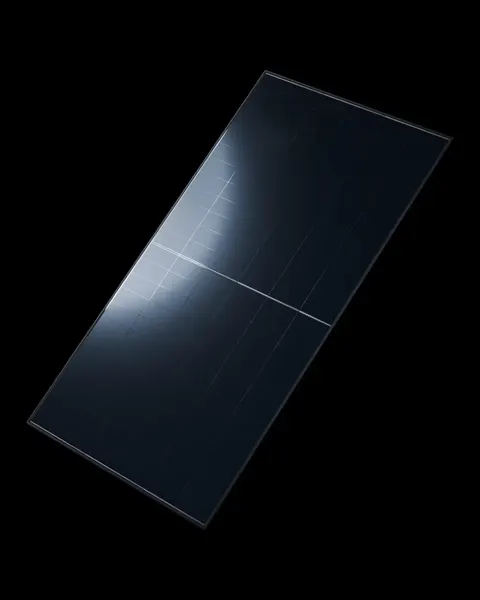
LONGi EcoLife LR7-54HVBImage: LONGi Europe, Hi-MO X10 page (range image) 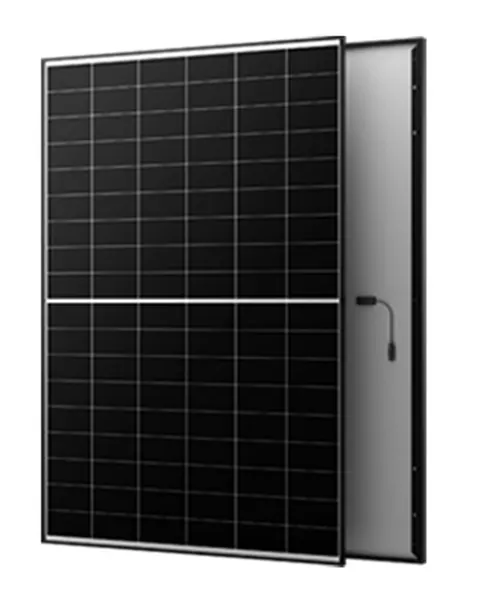
Aiko Neostar 2PImage: Aiko, Neostar 2P54 product page 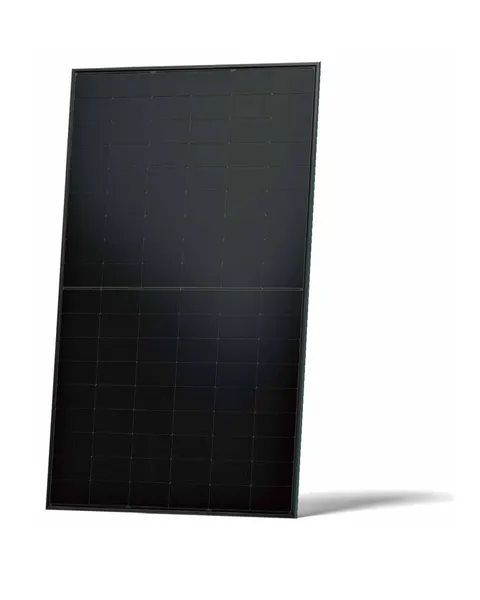
Jinko Tiger Neo 54HL4R-BImage: JinkoSolar datasheet 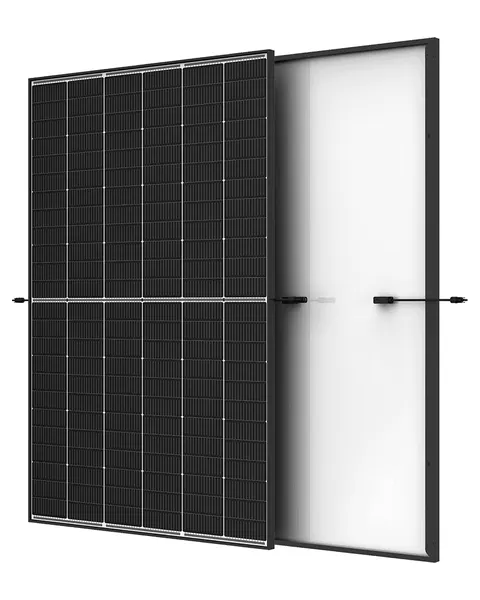
Trina Vertex S+ NEG9R.28Image: Trina Solar, NEG9R.28 product page 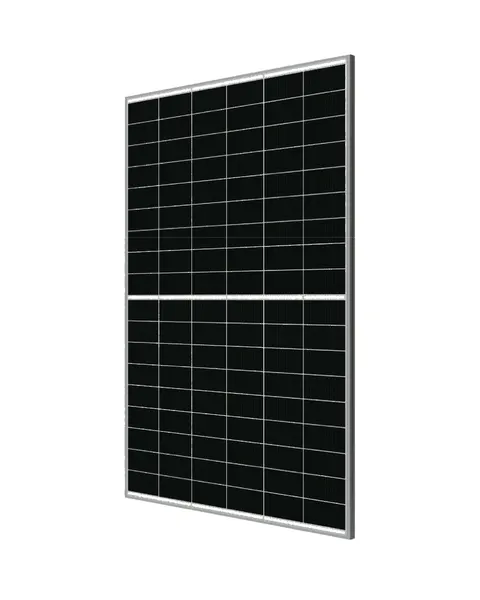
Canadian Solar CS6.1-54TDImage: Canadian Solar Japan datasheet 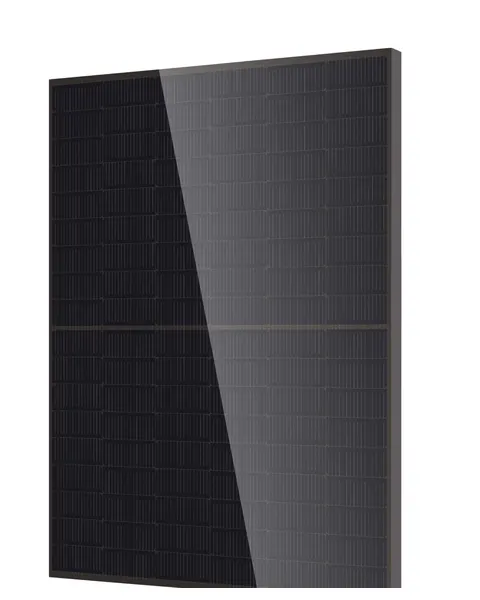
DMEGC M10RT-B54HBBImage: DMEGC Solar datasheet 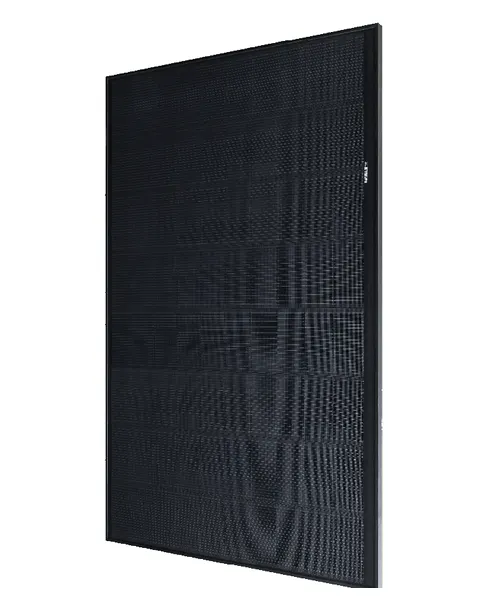
REC Alpha Pure-RImage: REC Group, Alpha Pure-R page 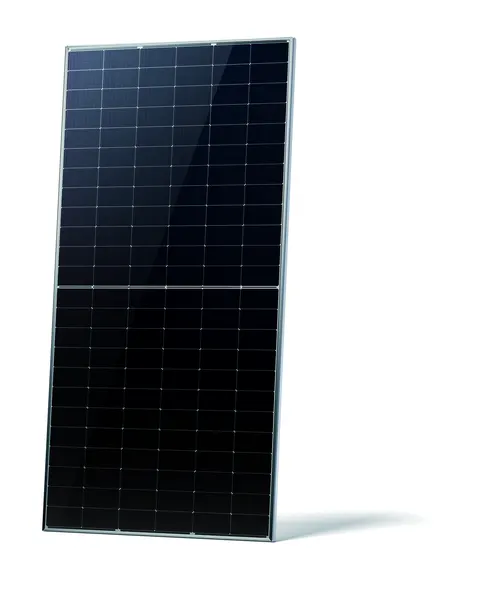
Jinko Tiger Neo 72HL4-(V)Image: JinkoSolar, Tiger Neo page
Sizes of panels sold in the UK, from the makers' datasheets
We read the current datasheet for each panel below, from the maker or from a copy of the maker's datasheet held by a distributor, and copied the length, width, weight and top wattage. Where a datasheet covers a range (for example 430 W to 455 W), the size and weight are the same across the range and we show the top wattage. We have not tested or weighed any of these panels ourselves, and makers can change a model without changing its name, so check the datasheet your installer sends you. MCS requires installers to give you the panel datasheet before you sign, along with a drawing of the proposed layout.
Seven of the eight panels are exactly 1,134 mm wide. The REC panel is narrower at 1,118 mm. The real difference is length: 1,730 mm to 1,800 mm for the common home size, and 2,278 mm for the larger 72-cell type. The pictures above come from each maker's own website or datasheet; panels from the same range can come with a silver or black frame.
| Panel | Size (mm) | Weight | Top watts |
|---|---|---|---|
| LONGi LR7-54HVB | 1800 x 1134 | 21.6 kg | 495 W |
| Aiko Neostar 2P | 1757 x 1134 | 20.6 kg | 485 W |
| Jinko Tiger Neo 54HL4R-B | 1762 x 1134 | 21.0 kg | 455 W |
| Trina Vertex S+ NEG9R.28 | 1762 x 1134 | 21.0 kg | 475 W |
| Canadian Solar CS6.1-54TD | 1800 x 1134 | 22.7 kg | 470 W |
| DMEGC M10RT-B54HBB | 1762 x 1134 | 24.5 kg | 450 W |
| REC Alpha Pure-R | 1730 x 1118 | 21.5 kg | 430 W |
| Jinko Tiger Neo 72HL4-(V) | 2278 x 1134 | 27.0 kg | 605 W |
What those sizes mean per square metre
Dividing each panel's weight and wattage by its area gives two figures that are more useful than the size alone: how much weight each square metre of roof carries, and how much roof each kWp of panels takes up. We worked these out from the datasheet figures above, using the top wattage in each range. Lower wattages in the same range give slightly more area per kWp.
The spread is narrow. Every panel puts about 10 to 12 kg on each square metre it covers, and each kWp needs about 4.1 to 4.5 square metres of panel. So a 4 kWp array covers roughly 16.4 to 18 square metres of panel, before any gaps between panels. The panels with the highest watts per square metre (the LONGi and Aiko back contact cell models) need the least roof for each kWp.
| Panel | Cells | kg per m2 | m2 per kWp |
|---|---|---|---|
| LONGi LR7-54HVB | 108 | 10.6 | 4.12 |
| Aiko Neostar 2P | 108 | 10.3 | 4.11 |
| Jinko 54HL4R-B | 108 (54 x 2) | 10.5 | 4.39 |
| Trina NEG9R.28 | 144 | 10.5 | 4.21 |
| Canadian Solar CS6.1-54TD | 108 | 11.1 | 4.34 |
| DMEGC M10RT-B54HBB | 108 | 12.3 | 4.44 |
| REC Alpha Pure-R | 80 half-cut | 11.1 | 4.50 |
| Jinko 72HL4-(V) | 144 (72 x 2) | 10.5 | 4.27 |
Why a 54-cell panel has 108 cells, and why cell count is a poor guide to size
Panels are often sold as 54-cell or 72-cell, but most datasheets now list double that number because each cell is cut in half. Jinko writes its home panel as 108 (54 x 2) and its larger panel as 144 (72 x 2). The 54-cell size is the one most UK home installs use, at around 1.76 to 1.80 metres long. The 72-cell size is about half a metre longer at 2,278 mm.
Cell count alone does not tell you the size. Trina's Vertex S+ lists 144 cells in the same 1,762 x 1,134 mm frame that Jinko and DMEGC fill with 108 cells, and REC uses 80 half-cut cells in a 1,730 x 1,118 mm frame. If you are planning a layout, ask for the millimetre dimensions from the datasheet, not the cell count.
The edge rule: 400 mm clear around the roof
MCS installers work to MIS 3002, the solar PV installation standard. Issue 6.0, published on 18 March 2026 and mandatory from 18 June 2026, says panels should not be mounted within 400 mm of any edge of a domestic roof unless specific measures are taken. Those measures are extra fixings (and extra roof timbers where needed) to resist the stronger wind uplift near edges, keeping ridge tiles secure, not disturbing how rainwater runs off, making sure snow building up or sliding off cannot hurt anyone or damage property, and reducing wind noise.
Whether to keep the margin clear or add those measures is your installer's call at survey. The margin applies at the ridge, the eaves and both sides (verges or hips), so it takes 800 mm off both the width and the height of the area you can use. Chimneys, vents and roof windows also take space, and MIS 3002 says the layout should allow access for maintenance and emergency services.
Worked example: how many panels fit on one roof face
Take a plain rectangular roof face 8.0 metres wide along the eaves and 5.0 metres from eaves to ridge measured up the slope (not the height seen from the ground). Leaving 400 mm clear on every side leaves a usable area of 7.2 metres by 4.2 metres.
With 1,762 x 1,134 mm panels standing upright (portrait), six fit across (6 x 1,134 mm is 6.80 metres, leaving about 0.4 metres for clamps and gaps) and two rows fit up the slope (2 x 1,762 mm is 3.52 metres). That is 12 panels. Laid sideways (landscape), four fit across and three rows fit up the slope, which is also 12 on paper, but four panels side by side take 7.05 metres of the 7.2 metres, leaving only about 15 cm for every clamp and gap in the row, so that layout is tight. At 455 W each, 12 panels is 5.46 kWp. With the slightly longer 1,800 mm LONGi panel at 495 W, 12 still fit in portrait and give 5.94 kWp.
Clamps and the gaps between panels take a few centimetres each, and the exact figure depends on the mounting kit, so treat any layout that only just fits on paper as a maybe. Your installer's survey drawing is the real answer. To see what these system sizes might produce in a year, use our solar panel calculator or read how much electricity a solar panel produces.
| Panel and layout | Across | Rows | Total |
|---|---|---|---|
| 1762 mm, portrait | 6 | 2 | 12 (5.46 kWp) |
| 1762 mm, landscape | 4 (tight) | 3 | 12 (5.46 kWp), tight |
| 1800 mm, portrait | 6 | 2 | 12 (5.94 kWp) |
| 2278 mm, portrait | 6 | 1 | 6 (3.63 kWp) |
| 2278 mm, landscape | 3 | 3 | 9 (5.45 kWp) |
Big 2 metre panels on small roofs
A 605 W panel sounds like it should give you more power from the same roof, but on a small face the length often works against it. In the example above, the 2,278 mm panel only fits one row in portrait, because two rows would need 4.56 metres and only 4.2 metres is usable. Turned to landscape it fits nine panels for 5.45 kWp, which is still below the 5.94 kWp from twelve 1,800 mm panels on the same roof.
The larger panel is also heavier to carry up a ladder: 27.0 kg against 20.6 to 24.5 kg for the 54-cell panels in our table. MIS 3002 notes that solar work combines electric shock, falls and handling large objects at height. Large panels make most sense on wide, unobstructed roofs such as barns, flat roofs and ground mounts. For a typical house, a 54-cell panel at 450 W to 495 W usually gives the most kWp per roof face, and our guide to how many solar panels you need works with panels of about that size.
Weight and the roof structure
MIS 3002 requires the roof structure to be checked by a suitably competent person before panels go on. For roofs built from trussed rafters it gives a typical design dead load of 0.785 kN per square metre, from which the weight of the existing roof covering is taken away to leave the load available for the solar array.
The panels in our table add about 10 to 12 kg per square metre, which is about 0.10 to 0.12 kN per square metre, before the rails, clamps and hooks are added. Heavy coverings such as concrete tiles or natural slate leave less spare capacity than light ones, so the check matters. The standard says a qualified structural engineer should be consulted where the roof is unusual or there is any doubt, for example a roof that shows signs of structural distress, has a pitch below 30 degrees, or has dormers, valleys or parapets that can trap snow. If your roof is slate, our guide to solar panels on a slate roof covers the fixing side.
Measuring your own roof
You can make a rough count before any installer visits. You need the length of each usable roof face along the eaves and its length up the slope.
- Width: measure the eaves length from plans or with a laser measure from the ground, and note where hips or a party wall cut it short.
- Slope length: if you know the pitch and the horizontal depth from eaves to ridge, divide the depth by the cosine of the pitch. A 4 metre depth at 35 degrees is about 4.9 metres up the slope.
- Take 0.8 metres off both figures for the 400 mm edge margin, then subtract obstructions.
- Divide the usable width by 1.134 metres and the usable slope by 1.762 metres (portrait), and round both down. Try landscape too and keep the higher count, but treat any row that leaves less than about 20 cm spare as tight.
- Multiply by the panel wattage to get kWp. If you are aiming high, our 10kW solar system guide shows how many panels that size takes.

G98 and G99 paperwork
Not sure which form your system needs?
The free route finder works out whether your solar or battery is G98, or G99 SGI-1, SGI-2 or SGI-3, from the inverter sizes. The £19 pack then fills in the form data, the evidence checklist and the letters for your network operator.
Frequently asked questions
What size is a standard solar panel in the UK?
Most home panels on current datasheets are 1,757 to 1,800 mm long and 1,134 mm wide, with a 30 mm frame. That is about 2 square metres. The REC Alpha Pure-R is a little smaller at 1,730 x 1,118 mm.
How heavy is a solar panel?
The 54-cell home panels we checked weigh 20.6 kg (Aiko Neostar 2P) to 24.5 kg (the DMEGC double glass model). The larger Jinko 72-cell panel weighs 27.0 kg. Spread over the panel's area, that is about 10 to 12 kg per square metre.
How much roof space does a 4 kWp system need?
From the datasheets in our table, each kWp of panels covers about 4.1 to 4.5 square metres, so 4 kWp needs roughly 16.4 to 18 square metres of panel, plus the 400 mm edge margin and the gaps between panels. With 455 W panels that is nine panels.
Are bigger panels better?
Not on most house roofs. A 2,278 mm panel can leave unused strips because a whole row will not fit, and in our worked example it gave less total kWp than standard 1,800 mm panels. Larger panels suit wide roofs and ground mounts.
Can panels go right to the edge of the roof?
MIS 3002 says panels should not be mounted within 400 mm of any edge of a domestic roof unless specific measures are taken, such as extra fixings to resist wind uplift and keeping ridge tiles secure. Ask your installer how they have treated the edges on the layout drawing.
Want a real price for your home?
Figures here are a guide. An installer still needs to see your fuse board, where the battery will go and whether you want backup. Tell us your postcode and local installers will quote.
Related guides


Sources
- LONGi: EcoLife X10 LR7-54HVB 465 to 495M datasheet (BGV02 20250820), copy held by Stralend Groen: 1800 x 1134 x 30 mm, 21.6 kg, 108 cells (checked 27 Nov 2026)
- LONGi Europe: Hi-MO X10 page (product image)
- Aiko: Neostar 2P AIKO-A-MAH54Mw datasheet (V4.1, October 2025): 1757 x 1134 x 30 mm, 20.6 kg, 108 cells, 450 to 485 W (checked 27 Nov 2026)
- Aiko: Neostar 2P54 product page (product image)
- JinkoSolar: Tiger Neo 54HL4R-B 430 to 455 W datasheet (F8): 1762 x 1134 x 30 mm, 21.0 kg, 108 (54 x 2) cells (checked 27 Nov 2026)
- JinkoSolar: Tiger Neo 72HL4-(V) 580 to 605 W datasheet (F8): 2278 x 1134 x 30 mm, 27.0 kg, 144 (72 x 2) cells (checked 27 Nov 2026)
- JinkoSolar: Tiger Neo product page (72HL4-(V) image)
- Trina Solar: Vertex S+ TSM-NEG9R.28 datasheet (TSM_EN_2026_A): 1762 x 1134 x 30 mm, 21.0 kg, 144 cells, 450 to 475 W (checked 27 Nov 2026)
- Trina Solar: Vertex S+ NEG9R.28 product page (1762 x 1134 x 30 mm, product image)
- Canadian Solar (CSI Solar): TOPHiKu6 CS6.1-54TD datasheet (V1.3C25, December 2023), copy held by Plugin Solar: 1800 x 1134 x 30 mm, 22.7 kg, 108 cells, 445 to 470 W (checked 27 Nov 2026)
- Canadian Solar Japan: TOPHiKu6 CS6.1-54TD-460 to 470 datasheet (product image)
- DMEGC Solar: DMxxxM10RT-B54HBB datasheet (December 2023): 1762 x 1134 x 30 mm, 24.5 kg, 108 cells, 435 to 450 W (checked 27 Nov 2026)
- REC Group: Alpha Pure-R datasheet (IEC EN 5.2025): 1730 x 1118 x 30 mm, 1.93 m2, 21.5 kg, 80 half-cut cells, 400 to 430 W (checked 27 Nov 2026)
- REC Group: Alpha Pure-R product page (product image)
- MCS: MIS 3002 Issue 6.0, The Solar PV Standard (Installation), 18 March 2026, clauses 4.2.1, 5.1.5, 5.6.2, 5.9.4 to 5.9.7 and Table 1 (checked 27 Nov 2026)
- MCS: standards and tools library (MIS 3002 versions in force)